|
 |
|
History of Málaga
The archaeology has found at Málaga Neanderthal remains less than 30,000 years old so many scientifics think that Neanderthal Man may have coexisted with humans. Even in Zafarraya (60 km east from Málaga), remains found in one of the caves near the village have confirmed that the province of Málaga could be the latest site in Europe inhabited by Neanderthal man.
Málaga needed some more time to emerge. Málaga, with the name ‘Malaka' (fish salting place), was founded by the Phoenicians about 800 BC., and was used as a commercial enclave, following the colonisation that had been initiated 1100 BC. by the foundation of Gadir (Cádiz).
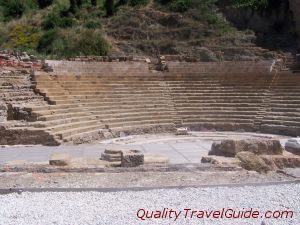 The Phoenicians were defeated by the Greeks (6th century BC), the Greeks founded the colony called Mainake, who controlled the city until was destroyed by the Carthaginians, who lived in the area until 206 B.C. They of course were to be embroiled in the Punic wars (ending in 202BC) which saw them expelled from Málaga by the Romans, & eventually the entire peninsular (Spain). Málaga was named Flavia Malacita by the Romans, and further on converted into an important point of passage, as it was connected with other Roman centres on the Peninsula and harbours of the Mediterranean Sea. The Roman Theatre, at the bottom of the Arabian fortress 'Alcazaba', is from this epoch, and despite its small dimensions, is one of the most ancient in the entire Hispania. The Phoenicians were defeated by the Greeks (6th century BC), the Greeks founded the colony called Mainake, who controlled the city until was destroyed by the Carthaginians, who lived in the area until 206 B.C. They of course were to be embroiled in the Punic wars (ending in 202BC) which saw them expelled from Málaga by the Romans, & eventually the entire peninsular (Spain). Málaga was named Flavia Malacita by the Romans, and further on converted into an important point of passage, as it was connected with other Roman centres on the Peninsula and harbours of the Mediterranean Sea. The Roman Theatre, at the bottom of the Arabian fortress 'Alcazaba', is from this epoch, and despite its small dimensions, is one of the most ancient in the entire Hispania.
After the fall of the Roman Empire, Málaga was affected by large migrations and settlements of German tribes, in particular the Silinge vandals who introduced the Arian Credo from the Orient. At the beginning of the 8th Century, the decay of the Gothic monarchy began, and from the coast of North Africa, the Arabs invaded the Iberian Peninsula.
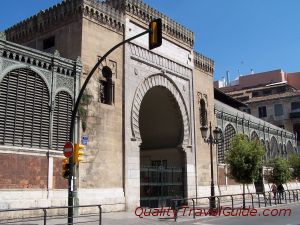 Málaga fell under their domain in 743. Málaga was converted into a flourishing town, surrounded by a wall with five huge gates. Numerous suburbs composed the town with a route across from east to west connecting the harbour and the Alcazaba with the interior district of the wall. The suburbs were occupied by Genoese merchants and Jews who settled down independently from the rest of the town. Abderramán III had the gate ‘La Puerta de Atarazanas' (above photo) constructed in 13th Century (which is the access to the Central Market nowadays). Though the first attempts of conquest took place in the 14th Century, it was not until near the end of 15th Century when the Catholic Kings achieved it. Málaga fell under their domain in 743. Málaga was converted into a flourishing town, surrounded by a wall with five huge gates. Numerous suburbs composed the town with a route across from east to west connecting the harbour and the Alcazaba with the interior district of the wall. The suburbs were occupied by Genoese merchants and Jews who settled down independently from the rest of the town. Abderramán III had the gate ‘La Puerta de Atarazanas' (above photo) constructed in 13th Century (which is the access to the Central Market nowadays). Though the first attempts of conquest took place in the 14th Century, it was not until near the end of 15th Century when the Catholic Kings achieved it.
Málaga was conquered on the 19th August 1487 (the last town to be conquered was Granada in 1492). Along with the conquest, religious communities were fundamental in urban growth, as they produced the integration of the surrounding suburbs. A big square was created for the first time, the main square, (today Constitution Square), and the convents of Victoria and Trinidad (Trinity) were founded.
A period of optimism was followed by a downturn in Málaga's fortunes. The 16th & 17th centuries were plagued by epidemics & bad harvests, in addition to economical crisis as a result of the expulsion of the Moors.
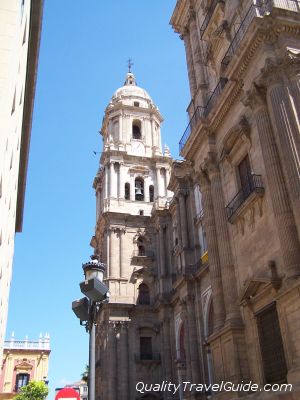 In the 17th Century, the harbour was constructed and later on it was extended. Although the works of the Cathedral started in 1528, they were not finished until the 18th Century, when Baroque was in an advanced state. In the same epoch, another extension of the harbour was carried out, and thus, the recuperation of the preceding centuries was reactivated. In the 17th Century, the harbour was constructed and later on it was extended. Although the works of the Cathedral started in 1528, they were not finished until the 18th Century, when Baroque was in an advanced state. In the same epoch, another extension of the harbour was carried out, and thus, the recuperation of the preceding centuries was reactivated.
In the 19th Century, Málaga began an important development of urban planning where a clear difference between the industrial area and a residential area with huge villas and hotels, was to be noticed. The main streets ‘Calle Marqués de Larios' and ‘Alameda' were opened. The outstanding negative events of the 19th Century were: the economic crisis and politics impacted by the tyranny of King 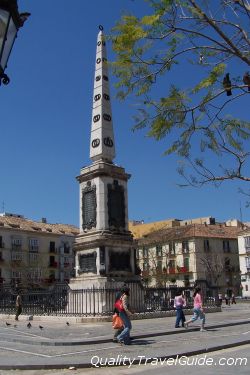 Fernando VII (who authorized the illegal shooting of Torrijos and his men.) An obelisk (right photo) was erected to honour the General and his men in the square ‘ Plaza de la Merced ', which today is the centre for cultural activities and popular fiestas. The first decades of the 20th Century were not very prosperous but from the Sixties onwards, the tourist boom in Spain has transformed Málaga. Millions of people have chosen Málaga as the town for their holidays, and thousands as their ideal place to reside. Málaga has become the fifth town of Spain in importance and is one of the modern European capitals, enriched by international diversity and a mixture of different cultures. Since 1992 Málaga has enjoyed a wide infrastructure as to its road system and its magnificent national motorway connections, and its airport is one of the most important in Europe. Fernando VII (who authorized the illegal shooting of Torrijos and his men.) An obelisk (right photo) was erected to honour the General and his men in the square ‘ Plaza de la Merced ', which today is the centre for cultural activities and popular fiestas. The first decades of the 20th Century were not very prosperous but from the Sixties onwards, the tourist boom in Spain has transformed Málaga. Millions of people have chosen Málaga as the town for their holidays, and thousands as their ideal place to reside. Málaga has become the fifth town of Spain in importance and is one of the modern European capitals, enriched by international diversity and a mixture of different cultures. Since 1992 Málaga has enjoyed a wide infrastructure as to its road system and its magnificent national motorway connections, and its airport is one of the most important in Europe.
back
to top
Disclaimer: We've tried to make the information on this web site as accurate as possible, but it is provided 'as is' and we accept no responsibility for any loss, injury or inconvenience sustained by anyone resulting from this information.
Malagainformation.com is a website owned by the Spanish company Spanish & Internship Consultant S.L. Calle Miguel Bueno Lara, 8, 6-3. info@malagainformation.com, which is listed in the official Business Registry of Malaga (Registro Mercantil) with the following Cif and registration numbers (Cif B92896588, Tomo 4437, Libro 3346, Folio 40).
|
|
 view
enlargement view
enlargement
|